

Few projects illustrate this more clearly than Farming on Crutches, a regenerative agriculture school in Sierra Leone. Its mission is deceptively simple: train amputees to become smallholder farmers using low‑cost, soil‑based, regenerative methods and adapt essential tools so that people with limb differences can farm independently. For communities long excluded from agricultural work, that simplicity is life-changing.
A civil-war legacy meets a farming opportunity
The school’s origins trace back to Sierra Leone’s decade-long civil war – a conflict marked by brutal machete attacks that left an estimated 30,000 people amputated and hundreds of thousands living with disabilities.
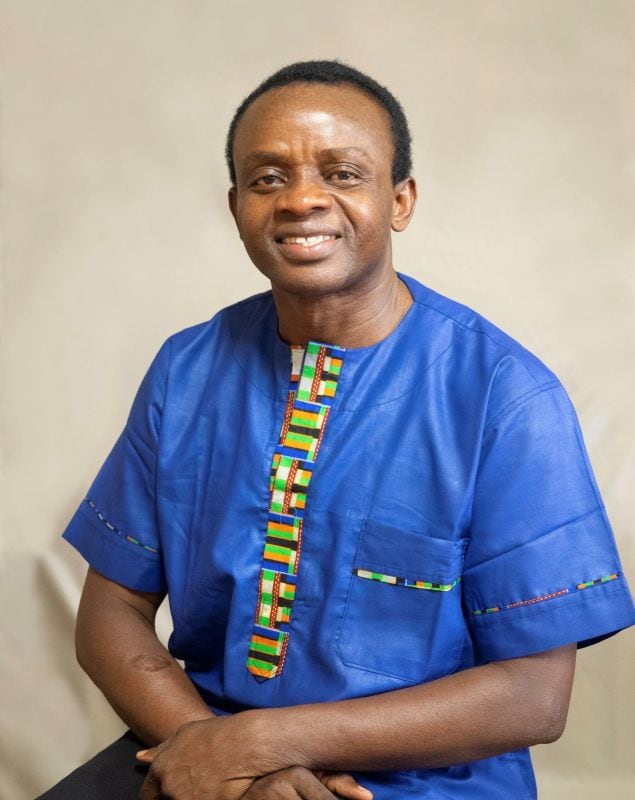
Farming on Crutches founder Mambud Samai was forced to flee the country during the fighting. When he returned home, he knew something needed to be done. “Amputee victims are often left with no work, limited support from the state and very little dignity,” he told AgTechNavigator.
His first initiative came in 2001: the Single-Leg Amputee Sports Association, using football as a tool for rehabilitation and community-building. But it was not until 2018 – after completing a community development and organic farming programme at the Asian Rural Institute in Japan – that Samai launched Farming on Crutches as an agricultural training school.
Since 2020, more than 100 amputees have completed its one‑week intensive regenerative farming programme.
Regenerative farming as rehabilitation – and climate strategy
Sierra Leone sits among the 10% most climate‑vulnerable countries globally, facing rising temperatures and erratic rainfall. For Samai, regenerative practices were not just a philosophical choice but a practical one.
“We farm in tune with nature, based on agro‑ecology and permaculture,” he said. “It improves food security and health outcomes; regenerates soil and avoids dependence on expensive fertilisers and toxic pesticides.”
Participants live and learn on a three‑acre demonstration farm; a “living classroom” tailored for people who have historically been shut out of physical labour. The programme equips them to set up their own micro‑farms, generate income, and share regenerative practices within their communities.
Passing on this knowledge, Samai believes, helps to both regenerate the soil and rehabilitate those who are often marginalised.
“There is very little support for those who have lost a limb in Sierra Leone,” he stressed. “Many are left completely isolated from physical jobs like farming. We believe that regenerative, small-scale farming can provide a vital way to help this community become changemakers in their society.”
Rethinking agri‑tech: When innovation starts with a wheelbarrow
When Samai talks about technology, he does not begin with drones or decision-support tools. He begins with a wheelbarrow.
“For smallholders, the humble wheelbarrow is central to everything,” he said. “But using one is something you or I may take for granted.”
During a recent cohort, a group of amputee farmers – men and women with either one leg or one arm – set out to co‑design a wheelbarrow they could actually use. Using bamboo grown on the farm, locally purchased timber, and two bicycle wheels, they built a stable, lightweight prototype that dramatically increased their productivity.

“That’s agri‑tech in action,” said Samai. “In a far simpler way than many of us have become accustomed to.”
The project now hopes to source refurbished bicycle wheels from UK partners to lower costs, with the long‑term goal of providing every graduate with their own adapted wheelbarrow.
“It’s important not to forget the basics,” Samai said. “Sometimes it’s just a modified wheelbarrow that can be the tech which provides a community with an essential lifeline.”
Design for the margins, improve the mainstream
So far, every adapted tool at the school has been designed by amputee farmers themselves, an approach Samai believes the wider agri‑tech industry should embrace.
“What we ask of mainstream agri‑tech innovators is to involve disabled farmers at the design stage, not at the end,” he said. “Farmers with disabilities are not a niche – they are part of the agricultural workforce worldwide.”
He urges companies to test equipment with disabled users in real field conditions, invest in modular designs, and treat affordability as a feature, not an afterthought.
“When you design for the margins,” he said, “you often create better solutions for the mainstream.”
Beyond yields: The human measure of technology
For Samai, the true purpose of technology is not measured in productivity curves or hectares covered.
“It is about empowering our farmers to live and work independently, achieving just as much as those without disabilities,” he said. “It is about removing unnecessary barriers so they can reclaim their purpose, confidence and dignity.”
We often describe technology as ‘transformational’, he points out. “While it may transform spreadsheets and efficiency metrics, its true power lies in how it can reshape lives – especially for those who have long faced exclusions.”
Scaling a model for West Africa
Backed by UK-based partners including Be The Earth Foundation, Groundswell Festival, Pasture for Life, The Gibson Family Trusts and the Sheepdrove Trust, the school is now looking to expand. Plans include increasing training frequency during the 2026-2027 dry seasons, introducing beekeeping, and exploring value‑added processing such as drying, fermenting and packaging.
Longer term, Samai has a bolder vision: a network of regenerative farming schools across West Africa, all designed to support disabled farmers and regenerate depleted soils.
“We already have a long waiting list of Sierra Leoneans who would like to join the course,” he said. “My goal is to grow this project beyond our borders. A network of schools across West Africa working together to regenerate soil and society – that would be a goal worth celebrating.”
If you’ve been inspired by Mambud’s story, Farming on Crutches and Be The Earth are looking for like-minded partners to work with. If of interest, please contact mia@betheearth.foundation.


