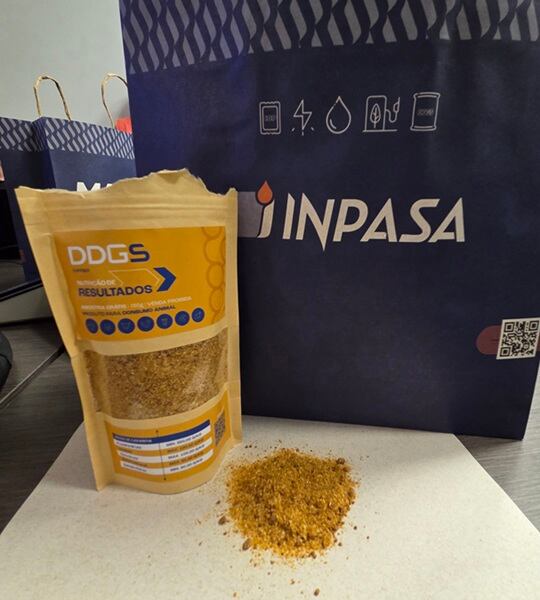


Just outside the city of Sinop in the Brazilian state of Mato Grosso, energy producer Inpasa operates one of the largest bioethanol plants in the world, which is not only keeping Brazil’s economy on the go, but also playing a crucial role in cattle production thanks to the nutritious feedstock dried distillers’ grains with solubles (DDGS).
Through its bioethanol manufacturing process, Inpasa creates two main agricultural products — DDGS and corn oil — Bruno Maier, corporate sustainability and advocacy manager at Inpasa, shared during a presentation and tour of the Sinop facility on Feb. 5. Inpasa’s DDGS contains 32% protein content and is a highly digestible feed for many types of livestock, the company shared.
Inpasa went from producing 0.4 million tons of DDGS in 2020 to 3 million tons in 2025, growing at a 50% CAGR, as shared in the presentation. This supply of DDGS can feed 2.1 million heads of cattle, equating to 4 kg of fattening per day for a year.
Similarly, the bioethanol company grew its vegetable oil production from 36,000 tons in 2020 to 245,000 tons in 2025, growing at a 47% CAGR during the period, as the company shared.
Can Brazil become a major DDGS exporter?
Brazil’s growing corn market is creating opportunities for valuable byproducts like DDGS, Maier noted.
This comes as U.S. exports of DDGS appear to slow slightly in 2025, with 9.724 million metric tons of the feedstock exported in the first 10 months of 2025, compared to 10.212 million metric tons for the same period the previous year, according to USDA data.
Brazil’s ag sector has room to expand corn production due to underutilized soybean areas during the off-season and reviving degraded lands — all without the need for deforestation — he added. Brazil produced 136 million metric tons of corn in the 2024-25 harvest, making it the third largest corn producer behind China and the U.S., per USDA estimates.
Most soybean farmers in Mato Grosso (58%) plant and harvest an intermediate corn crop, which is higher than the 38% average of Brazilian farmers who do the same, according to CONAB, IBGE, and IMEA data.
In early February, Inpasa made its first shipment of DDGS to China, shipping 62,000 tons from the port of Imbituba, the company shared in a LinkedIn post. This follows a trade agreement between the Chinese and Brazilian governments signed on May 13, which allowed Brazil to begin exporting distillers’ dried grains and DDGS.
Inpasa is also expanding its core business of biofuel, producing 5.8 billion liters of ethanol in 2025, enough to fuel 1.2 billion cars with e10, the company shared during the presentation.
Brazil has a history of biofuel production, stretching back to the 1973 oil crisis, which led to the country’s National Alcohol Program that boosted ethanol production from sugar cane.